Overview Capabilities Dashboards Workflow Integrations FAQ
SWE Factory ATrace

Engineering traceability
across existing tools

Connect requirements, architecture, design, source code, test projects, verification results and structural coverage into one baseline-aware engineering evidence model.

Polarion TPT Git Jenkins Grafana
Overview

One view of engineering evidence

ATrace does not replace engineering tools. It connects their artifacts, versions and results into a consistent traceability model.

Traceability

Follow relationships from software requirements through architecture, detailed design, source files, test cases and verification results.

Baseline awareness

Review evidence against a specific Polarion revision, TPT revision, source revision and report revision.

Engineering visibility

Expose gaps, coverage, test status and evidence trends through focused dashboards for engineers, leads and assessors.

Capabilities

From artifact inventory to verification readiness

Artifact inventory

Count and inspect requirements, architecture items, design items, source files, TPT projects, test cases and result artifacts.

Forward and backward traceability

Detect missing links in both directions, such as requirements without architecture or architecture without requirements.

Verification results

Show test runs, pass/fail status, test-case results and report references for the selected engineering scope.

Structural coverage

Present statement, decision, condition and MC/DC coverage alongside the related test execution and baseline.

Historical trends

Track artifact counts, traceability issues and verification progress across imported baselines and releases.

Assessment-oriented evidence

Provide structured, reviewable engineering evidence for internal reviews, project gates and ASPICE-oriented assessments.

Product dashboards

See ATrace in action

Review traceability, verification and structural coverage through baseline-aware engineering dashboards built around the existing toolchain.

Traceability

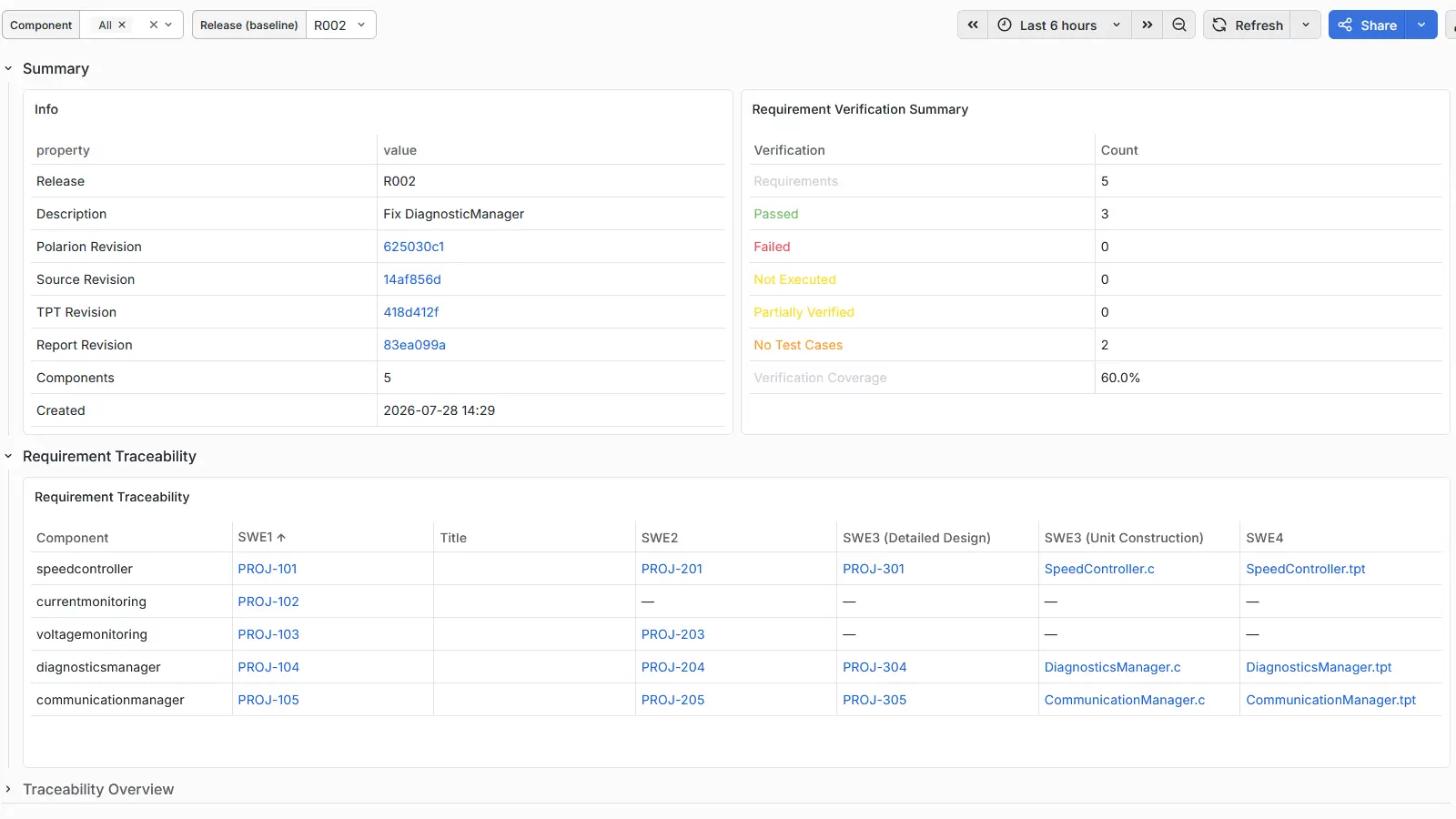
End-to-End Requirement Traceability

Navigate the engineering chain from software requirements through architecture, detailed design, implementation and test cases. Each view is tied to the selected release baseline and its source revisions.

  • SWE.1–SWE.4 artifact chain
  • Baseline and revision context
  • Linked source and test artifacts
  • Review-oriented evidence view
Gap analysis

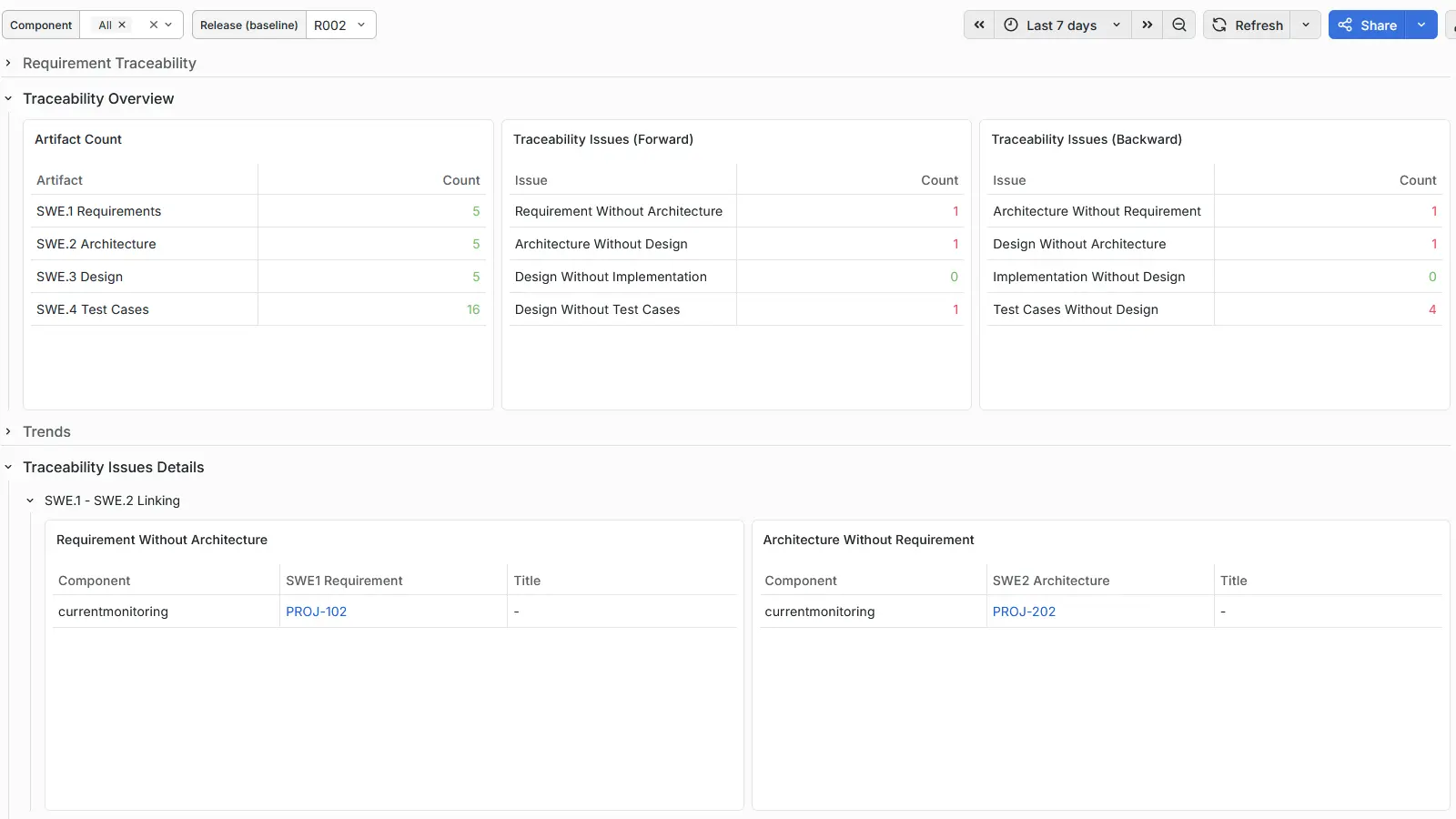
Traceability Health Overview

Identify missing forward and backward links at a glance. Artifact counts and issue summaries focus engineering reviews on concrete gaps before release gates or assessments.

  • Artifact inventory by lifecycle level
  • Forward traceability issues
  • Backward traceability issues
  • Drill-down to affected items
Verification

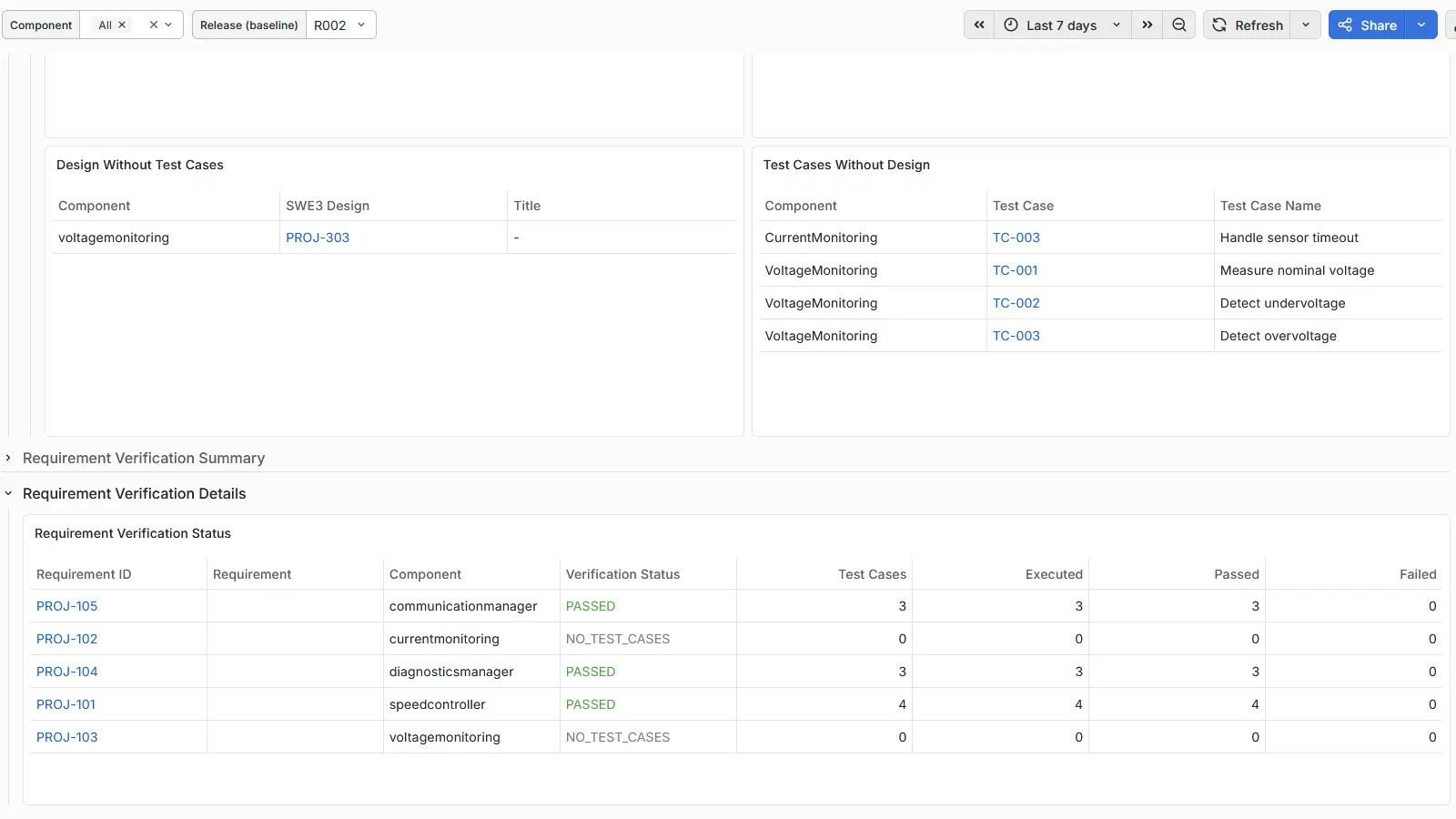
Requirement Verification Status

Track verification progress across software components and connect every requirement status to its test-case evidence for the selected release.

  • Passed, failed and uncovered requirements
  • Requirements without test cases
  • Test cases without design links
  • Release-level verification coverage
Coverage

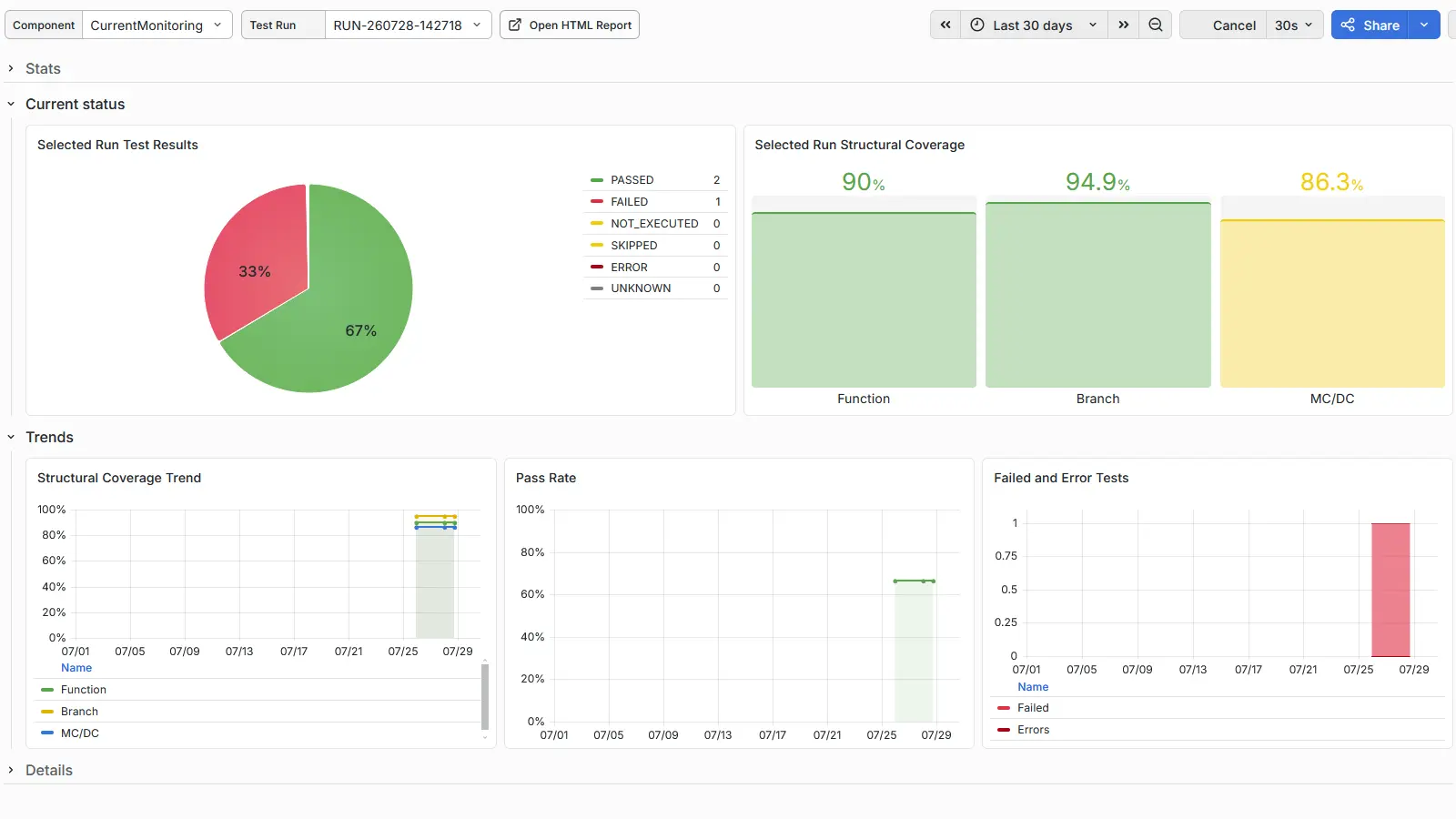
Structural Coverage Analytics

Review the selected test run together with function, branch and MC/DC coverage, test status and historical execution trends.

  • Function coverage
  • Branch coverage
  • MC/DC coverage
  • Run history and trend analysis
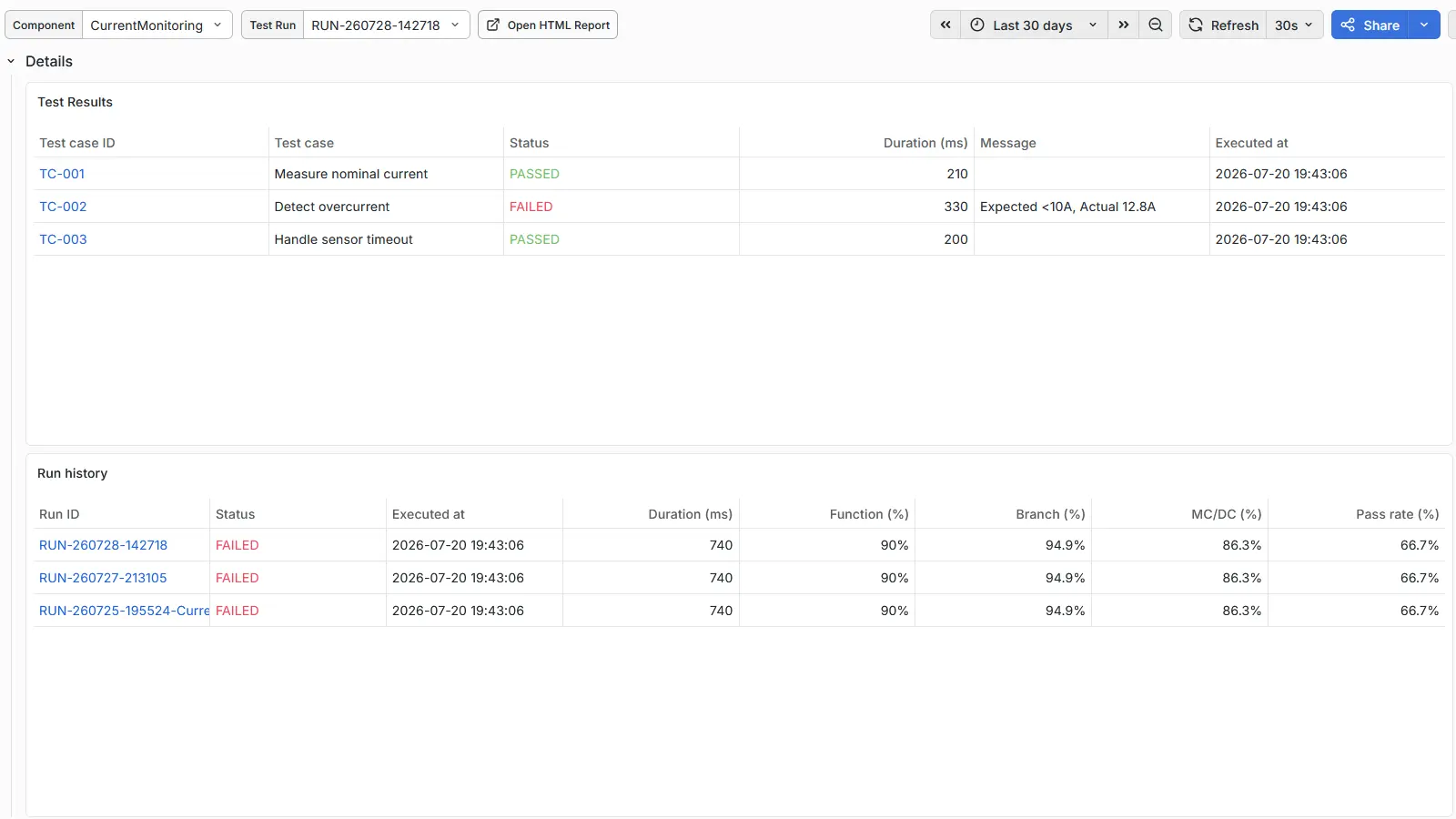
Test evidence

Detailed Test Execution Results

Drill down from coverage indicators to individual test cases, failure messages, execution duration and historical runs, with direct access to the original HTML report.

  • Individual test-case status
  • Failure messages and duration
  • Historical run comparison
  • Original report reference
Workflow

Connect, normalize and visualize

01

Collect

Import engineering artifacts and results from Polarion, TPT, Git, Jenkins and report repositories.

02

Normalize

Store artifacts, revisions, links and execution results in a consistent baseline-aware data model.

03

Review

Use dashboards to inspect completeness, traceability gaps, verification status and structural coverage.

Integrations

Built around your existing toolchain

The initial product scope focuses on automotive software engineering environments using established ALM, test and CI tools.

Polarion
TPT
Git
Jenkins
PostgreSQL
Grafana
FAQ

Common questions

No. ATrace connects existing tools and creates a consolidated engineering evidence model without requiring artifact migration.

No. The connector and mapping layer can be adapted to project-specific work-item types, link roles, repository structures and report formats.

Yes. Imported Polarion, TPT, source and report revisions can be stored and selected as part of a baseline-aware engineering view.

No. The same data supports daily engineering work, release reviews, gap analysis, verification planning and assessment preparation.
SWE Factory ATrace

Review traceability and verification evidence in one place

Request a focused demonstration using an automotive software project flow.

Request Demo